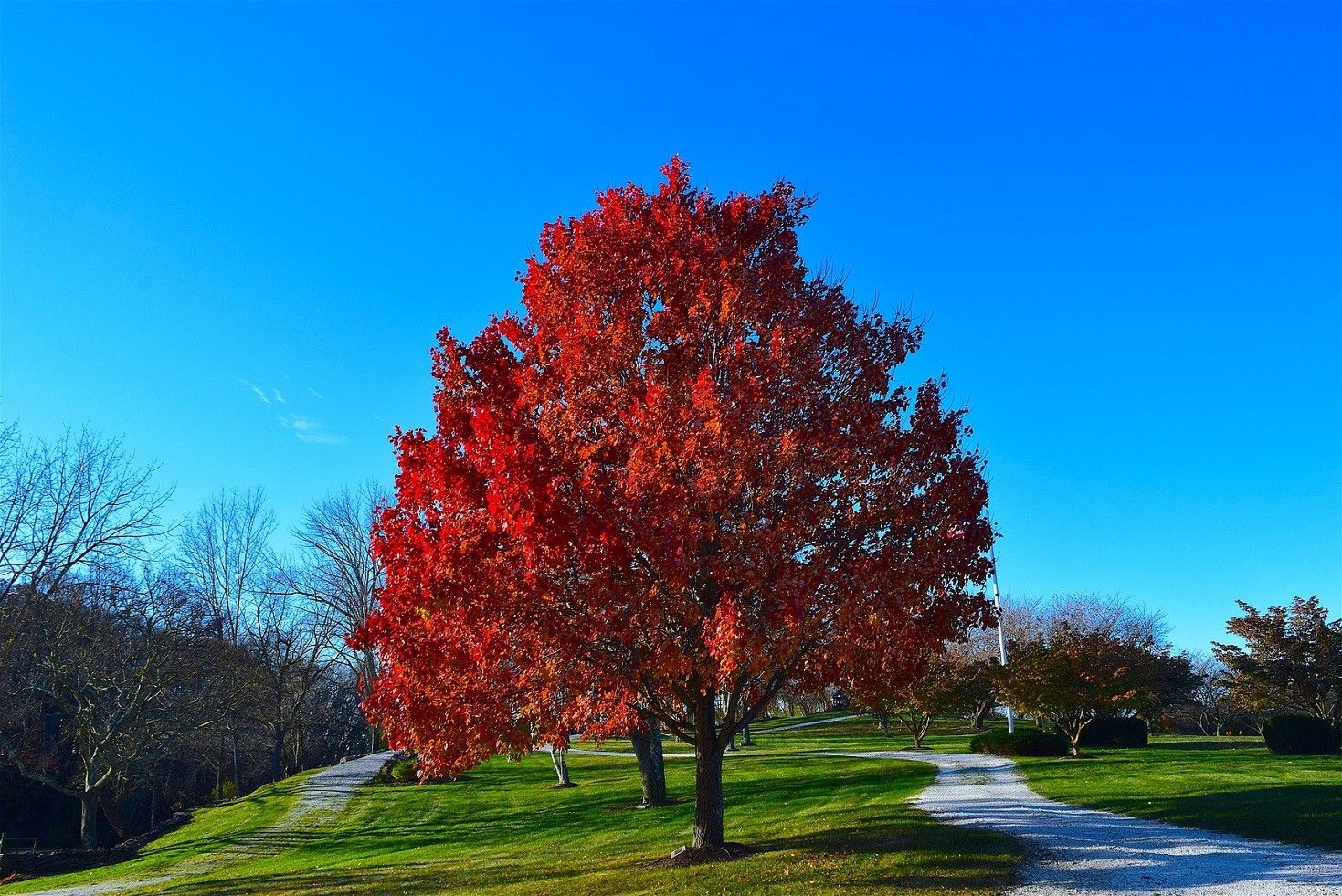
Size: Large deciduous tree, typically 40-50 feet tall and 35-40 feet wide at maturity.
Branches: Forms a broadly oval to rounded canopy with strong, well-angled branching for good structure and durability.
Leaves: Emerge with a reddish tint, maturing to rich, glossy dark green; lobed and palmate in shape.
Flowers: Produces small, reddish clusters in early spring before leaves fully emerge.
Bark: Grayish and smooth when young, developing a furrowed texture with age.
Habitat:
Highly sought after for its rapid growth, reliable brilliant ruby red fall color (even in warmer climates), and excellent shade-providing form, commonly used as a fast-growing ornamental shade tree, street tree, lawn specimen, or accent in landscapes, parks, and large yards, where it delivers dramatic autumn vibrancy and toughness.
**Tree arrives dormant in 30-gallon pot**
Tree Care:
Planting: Well-draining soil preferred, but highly adaptable; full sun to partial shade, proper spacing (at least 35-40 feet for mature size).
Soil: Tolerates a wide range including clay, loam, sand, wet conditions, and occasional drought once established; prefers slightly acidic to neutral pH, amend with organic matter if needed.
Watering: Keep soil consistently moist during establishment, then moderately drought tolerant—avoid prolonged waterlogging.
Fertilizing: Apply balanced, slow-release fertilizer in early spring.
Pruning: Prune in late winter to develop strong central leader and structure if needed, especially when young; avoid heavy pruning during active growth.
Pest and Disease Control: Monitor for issues like aphids, scale, or verticillium wilt and apply controls if necessary.
Mulching: Use mulch to retain soil moisture and suppress weeds, keeping it away from the trunk.
Foliage: Known for its fast-growing, broadly oval form with glossy green summer leaves that transition to stunning, persistent ruby red brilliance in fall, often holding color until hard frost for reliable seasonal drama.