Tree Description:
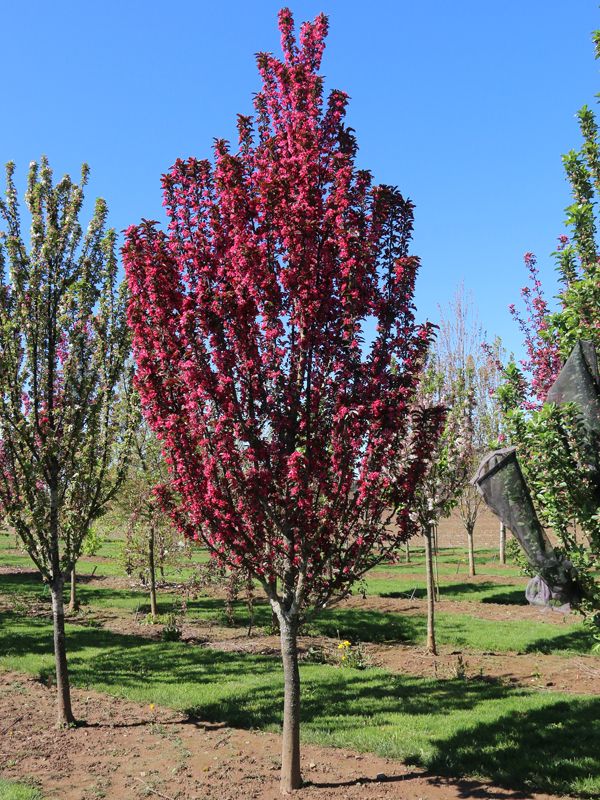
Size: Narrow, upright deciduous ornamental tree, typically 15–20 feet tall and 5–8 feet wide, forming a slender columnar shape.
Branches: Strong upright branching creates a tight, vertical silhouette, making it ideal for narrow spaces and structured landscape designs.
Leaves: Rich green foliage emerges in spring, creating a dense, clean appearance through the growing season before turning warm yellow tones in fall.
Flowers: Produces abundant clusters of vibrant raspberry-pink blossoms in spring, covering the upright branches with bold color.
Bark: Smooth gray-brown bark provides subtle texture and year-round interest.
Habitat:
Malus ‘Raspberry Spear’ is prized for its columnar growth habit and vivid spring blooms, making it an excellent choice for tight spaces, screening, entryways, or vertical accents where height without width is desired.
Tree arrives dormant in 15-gallon pot
Tree Care:
Planting: Plant in well-draining soil with full sun exposure for best flowering and strong growth; allow 5–8 feet of space for mature spread.
Soil: Prefers slightly acidic to neutral soil; amend with organic matter if needed to improve structure and drainage.
Watering: Keep soil evenly moist during establishment, avoiding overly saturated conditions.
Fertilizing: Apply a balanced, slow-release fertilizer in early spring to support healthy growth and blooming.
Pruning: Minimal pruning required; maintain the natural columnar form by removing any crossing or damaged branches.
Pest and Disease Control: Monitor for common crabapple pests and diseases and treat promptly if necessary.
Mulching: Apply mulch to retain soil moisture and suppress weeds, keeping mulch away from the trunk.
Foliage: Known for dense, upright branching lined with clean green leaves that enhance its narrow architectural shape.
Flowering: Masses of raspberry-pink blossoms appear in spring, creating a vibrant vertical floral display.
Proper care ensures a thriving Raspberry Spear Crabapple, appreciated for its slender form, bright blooms, and strong architectural presence in the landscape.