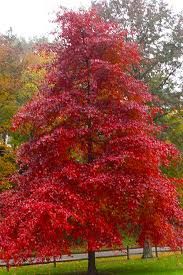
Size: Medium deciduous tree, typically 35-50 feet tall and 20-30 feet wide at maturity (often pyramidal to oval form when young, rounding with age).
Branches: Horizontal to slightly ascending, forming a symmetrical, rounded to irregular canopy with a straight trunk.
Leaves: Emerge bright red to bronze-red in spring (persisting with red tints into summer), maturing to glossy dark green; elliptical to obovate, providing clean, dense foliage.
Flowers: Produces small, greenish-white clusters in late spring (nectar-rich for bees, leading to prized tupelo honey on some trees).
Bark: Dark gray to blackish, deeply furrowed and blocky (alligator-skin like) with age.
Habitat:
Highly sought after for its multi-season color interest, native adaptability, and outstanding fall display, commonly used as an ornamental shade tree, specimen, or accent in landscapes, parks, yards, and naturalized areas, where it provides wildlife value (berries for birds, nectar for pollinators), reliable performance in moist or wet sites, and stunning seasonal drama from spring red new growth through fiery autumn hues.
**Tree arrives dormant in 15-gallon pot**
Tree Care:
Planting: Well-draining to moist soil preferred, but highly adaptable (tolerates wet sites, poor drainage, and occasional flooding); full sun to partial shade, proper spacing (at least 20-30 feet for mature size).
Soil: Prefers moist, acidic pH; adaptable to clay, loam, or sandy soils—amend with organic matter if needed; avoid highly alkaline to prevent chlorosis.
Watering: Keep soil consistently moist during establishment (especially important for young trees); tolerant of wet conditions and moderate drought once established—avoid prolonged dry spells in youth.
Fertilizing: Apply balanced, slow-release fertilizer in early spring.
Pruning: Prune minimally in late winter to remove dead wood or shape if needed; its natural form requires little intervention.
Pest and Disease Control: Monitor for issues like leaf spot, borers, or scale and apply controls if necessary; generally tough, low-maintenance, and resistant.
Mulching: Use mulch to retain soil moisture and suppress weeds, keeping it away from the trunk.
Foliage: Known for its pyramidal to rounded form with spectacular bright red spring new growth contrasting dark green summer leaves, exploding into brilliant yellow-orange to scarlet-purple-red in fall for multi-season fiery drama and reliable native appeal in moist or challenging landscapes.