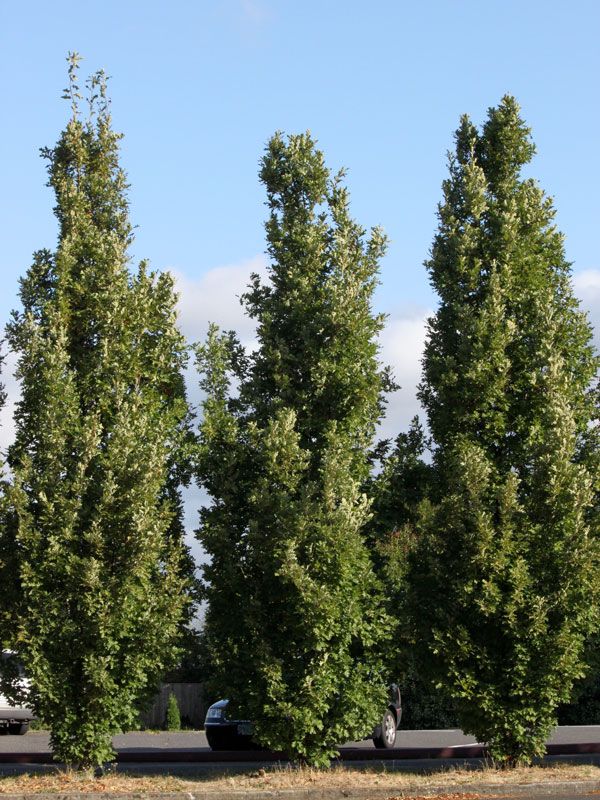
Size: Medium to large deciduous tree, typically 40-50 feet tall and 10-20 feet wide at maturity (narrowly columnar to fastigiate form).
Branches: Strongly upright and ascending, forming a tight, dense columnar structure with a strong central leader.
Leaves: Dark green, glossy, lobed (typical English oak shape), mildew-resistant, holding clean foliage through summer.
Flowers: Produces catkins in spring.
Bark: Dark brown to grayish, furrowed with age.
Habitat:
Highly sought after for its narrow, columnar habit, fast growth, and brilliant red fall color, commonly used as a street tree, in tight urban spaces, formal screens, allees, or as a vertical accent in landscapes and parks, where it provides a striking architectural silhouette, wildlife value via acorns, and excellent adaptability to urban conditions including drought tolerance once established.
**Tree arrives dormant in 30-gallon pot**
Tree Care:
Planting: Well-draining soil preferred, but adaptable to a range; full sun, proper spacing (at least 10-20 feet for mature width).
Soil: Tolerates varied soils including clay and urban sites; prefers slightly acidic to neutral pH, amend with organic matter if needed; avoid highly alkaline to prevent issues.
Watering: Keep soil consistently moist during establishment; drought tolerant once established, but performs best with moderate moisture—tolerates occasional dry periods.
Fertilizing: Apply balanced, slow-release fertilizer in early spring.
Pruning: Prune minimally in late winter to remove dead wood or maintain form; its natural columnar habit requires little shaping.
Pest and Disease Control: Monitor for issues like oak wilt, borers, or scale and apply controls if necessary; generally disease-resistant (mildew-resistant foliage) and tough.
Mulching: Use mulch to retain soil moisture and suppress weeds, keeping it away from the trunk.
Foliage: Known for its fast-growing, tightly columnar form with glossy dark green summer leaves that turn spectacular rusty red to crimson-red in fall (often persisting as light brown into winter), offering vertical drama, reliable seasonal color, and a superior alternative to narrower poplars in modern or urban landscapes.